Emotional Hunger
What the Body Says When Emotional Hunger Speaks First
Eleanor Whitfield
·
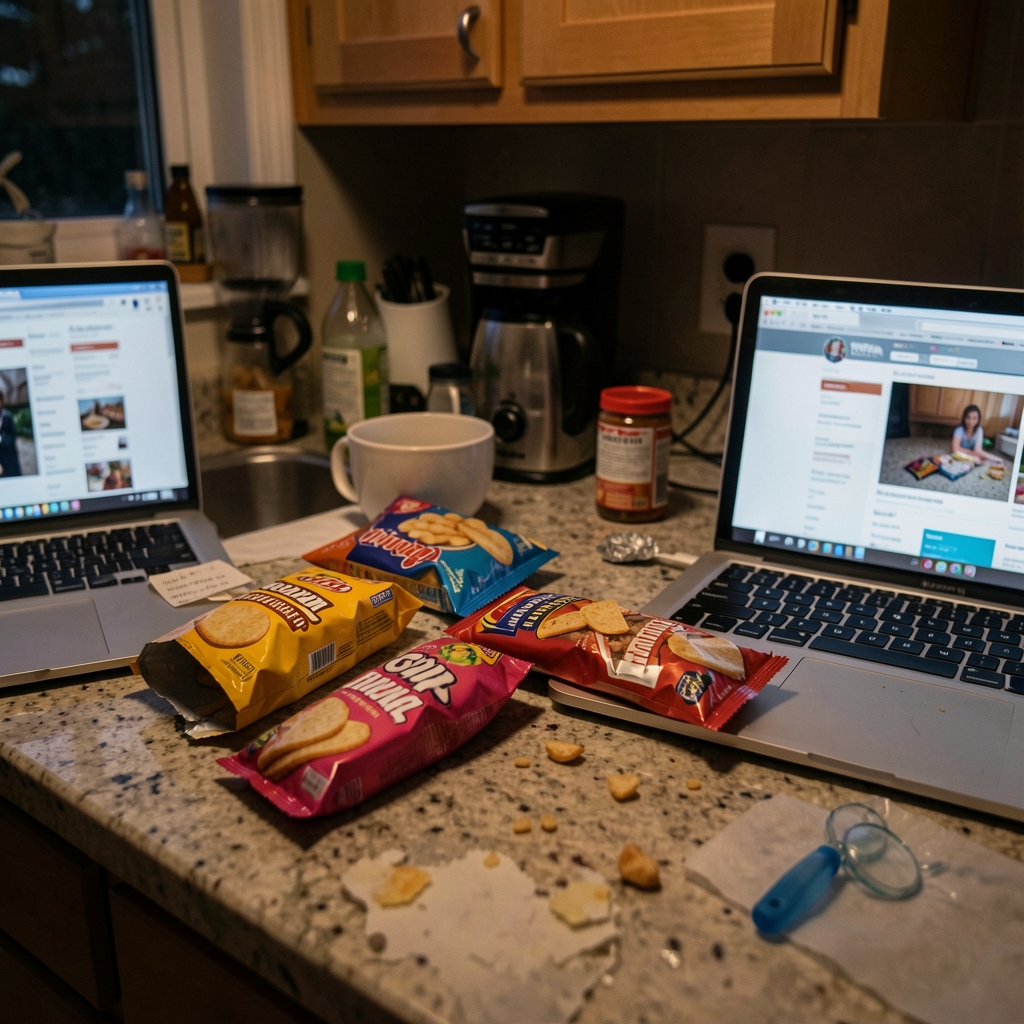
The physical setting in which a person eats is rarely considered in discussions of food behaviour. Conversation tends toward the psychological — the emotions, the cravings, the internal states. But the room, the table, the screen, the noise level, the lighting, and the presence or absence of other people all function as inputs to the act of eating. The environment is not a neutral backdrop; it is an active participant.
Research into choice architecture — the arrangement of environments to facilitate or discourage particular choices — has produced reliable findings about food availability and proximity. Food that is visible and within reach is consumed more frequently than food that is stored out of sight. A bowl of fruit on the counter is eaten; the same fruit placed in a drawer at the back of the refrigerator is largely forgotten.
This principle operates regardless of the person's stated preferences or intentions. The arrangement of the kitchen is doing work on eating behaviour that precedes any decision. A person who would like to eat more fruit and fewer biscuits can, without any exercise of willpower, shift the probability of outcomes by rearranging what is visible and accessible in the kitchen.
The inverse also holds. Snack foods stored in opaque containers, placed on high shelves or at the back of cupboards, are accessed less frequently than those in transparent packaging at eye level. The physical friction involved in retrieving a food — the extra steps, the reaching, the unwrapping — is not a large barrier in absolute terms. But it is a sufficient interruption to the automatic chain of cue-behaviour to introduce a moment of consideration. That moment is often enough.
The presence of a screen during eating — whether a phone, laptop, or television — consistently emerges as a moderating factor in how much is eaten and how much satisfaction is reported. Under conditions of divided attention, the sensory experience of eating is reduced. Flavour perception, texture awareness, and pace regulation are all compromised when attention is split between the food and a competing stimulus.
Studies in which participants are asked to eat the same meal under conditions of full attention versus screen engagement find that those eating attentively report the meal as more satisfying and consume less of it before stopping. Those eating with divided attention tend to underestimate how much they have consumed and report lower satisfaction — which may prompt further eating.
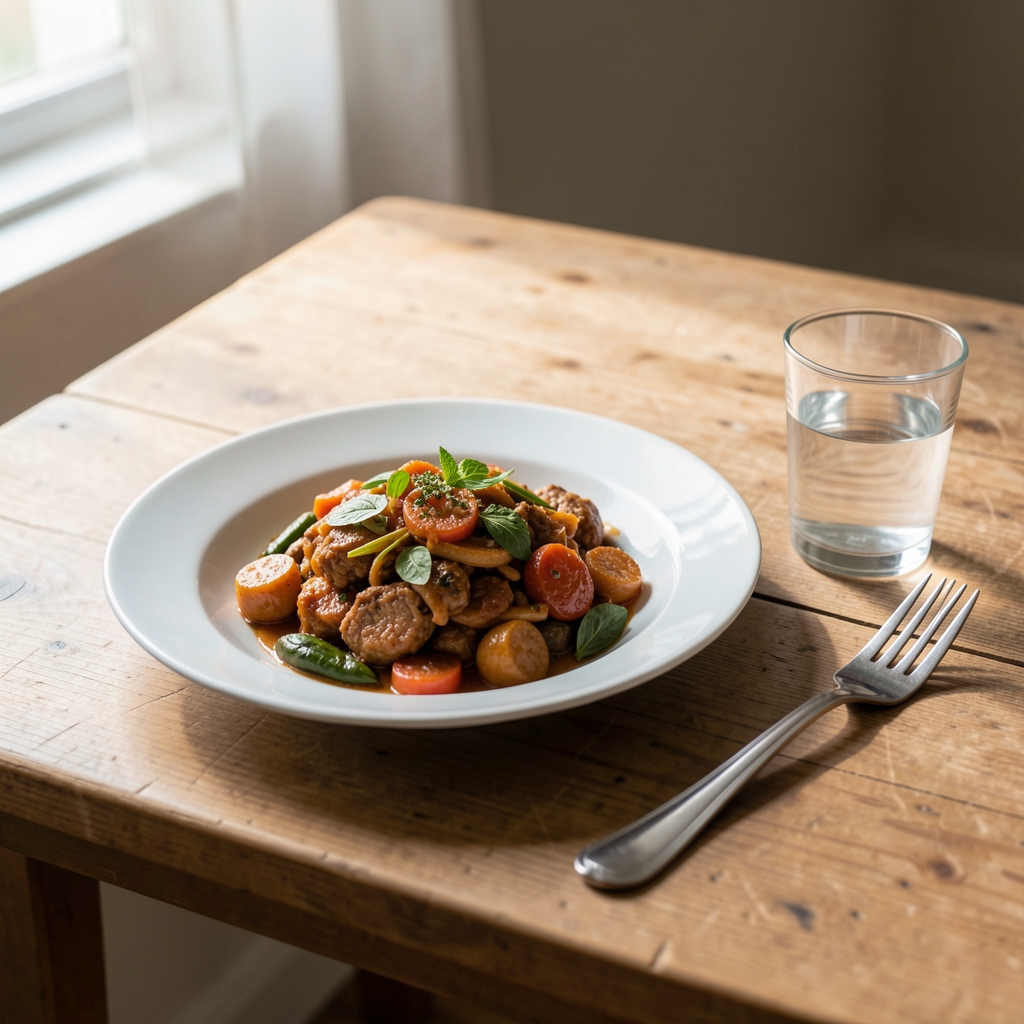
Attention while eating is not a form of performance or ritual. It is simply the act of remaining present to what is happening. Noticing the flavour, noticing the texture, noting when the food stops being enjoyable and becomes automatic consumption. These noticings do not require effort beyond the decision to make them. But in the current environment — where the default during many meals is screen engagement — choosing to eat without distraction requires a deliberate arrangement of the environment.
"The screen at the table is not passive. It is reshaping the experience of every meal eaten alongside it."
The relationship between eating pace and fullness recognition is well-established in the research literature. The body's satiation signals take time to register — typically fifteen to twenty minutes from the point at which the stomach has received adequate food. A person eating quickly — as is common when eating alone, distracted, or in a state of emotional urgency — can consume substantially more than the body requires before any fullness signal reaches conscious awareness.
Slowing down at mealtimes is consistently identified as one of the most accessible practical adjustments available, precisely because it does not require changing what is eaten — only the pace at which it is eaten. Placing cutlery down between bites, chewing more thoroughly, pausing mid-meal: these are small modifications to the pace of eating that bring it back into alignment with the body's feedback cycle.
Pace is also, it turns out, affected by the eating environment. People eat faster at noisy, brightly lit environments than at quieter, dimmer ones. Restaurant environments designed to increase table turnover — hard surfaces, high ambient noise, bright lighting — achieve their aim partly through this mechanism. The eating environment is exerting pressure on pace without the person at the table being aware of it.
The social context of eating is among the more powerful environmental variables. People eating in company tend to eat more — meals extend in duration, additional courses are ordered, social norms around finishing what is on the table operate more strongly. But the food consumed in company is also more likely to be reported as enjoyable and satisfying.
Eating alone carries a different set of pressures. Meals tend to be shorter and less elaborate. The risk of distracted eating is higher, given the absence of social engagement to occupy attention. For people who eat emotionally in response to loneliness, eating alone can function as both trigger and opportunity simultaneously.
Neither eating alone nor eating in company is inherently preferable. The relevant question is whether the eating environment — in either case — is one that supports attentive, paced engagement with the food, or one that encourages habitual, unconsidered consumption.
The practical implication of the research on eating environments is not that people should redesign their kitchens or eat exclusively in silence. It is that the environment is already doing work on eating behaviour, and that making some of that work visible — examining what the current arrangement supports and discourages — is a prior step to any considered change.
A food journal that notes not only what was eaten and the preceding emotional state but also the physical context — where the eating happened, whether a screen was present, whether it was alone or in company, what time it was — provides a richer account of the pattern. The most consistent eating trigger in a person's record may turn out to be not a specific emotional state but a specific location, a specific time of day, or a specific combination of environmental cues.
Rearranging those cues — moving the snack bowl, putting the phone in another room during meals, sitting at a table rather than on the sofa — changes the environmental inputs. The behaviour that was automatically prompted by the previous arrangement finds its cues missing. The chain is interrupted. Choice, where it was previously absent, becomes possible.
Articles published on Taldoren Letters are editorial in nature and reflect the writers' observations on everyday wellness practices. The content is not intended as professional advice, nor as guidance for the management of any specific condition. Readers with specific concerns about their daily routines are encouraged to speak with a qualified wellness professional.